

At their heart, B2B appointment setting services are like a special operations team for your sales division. Their one and only mission? To find, connect with, and schedule meetings with qualified decision-makers, dropping them right onto your sales reps' calendars. This frees up your closers to do what they do best: close.
What Are B2B Appointment Setting Services

Think of your top sales executives as world-class surgeons. Their time is incredibly valuable and is best spent in the operating room—in this case, conducting high-stakes sales demos and negotiations.
A B2B appointment setting service is the expert support team that handles all the prep work. They find the right patients (prospects), run the initial diagnostics to confirm there’s a real need (qualification), and get the surgery on the books (the sales meeting).
It's a simple, powerful concept. This setup ensures your surgeons only scrub in when there's a genuine, pre-vetted opportunity waiting for them. Without this team, your highly-paid experts would spend half their day wandering the hospital hallways trying to find patients. It’s just a terrible use of top-tier talent.
The Core Function and Value
The whole point of these services is to build a strong bridge between a flicker of marketing interest and a real sales conversation. This is where so many companies get stuck. They might generate some leads from a blog post or an ad, but turning that passive curiosity into a scheduled meeting on the calendar is a completely different ballgame.
An outsourced partner lives and breathes this specific, top-of-funnel work. They have the systems and the grit to handle the persistent, multi-channel outreach needed to get a "yes" from a busy executive. This discipline turns your sales pipeline from an unpredictable trickle into a reliable, steady flow of opportunities. The real value isn't just the appointments—it's the newfound efficiency and predictability.
By outsourcing the top of the sales funnel, companies empower their internal closers to focus purely on revenue-generating activities. This division of labor speeds up the entire sales cycle and maximizes the ROI on your most valuable people.
What These Services Actually Deliver
When you hire a firm, you're not just buying calls or emails. You're investing in a complete system designed to produce a specific outcome: qualified meetings. A professional service delivers a solution, not just a list of tasks they completed.
Here’s what you should expect them to handle:
- Targeted Prospect Lists: They don't just buy a list. They build and constantly refine a roster of people who fit your ideal customer profile (ICP) and have the power to make a decision.
- Strategic Outreach Cadences: They design and run smart, multi-step campaigns across email, phone, and social platforms like LinkedIn. It's a coordinated effort, not just random cold calls.
- Lead Qualification: They get on the phone and talk to prospects to make sure they're sales-ready. This often means confirming their budget, authority, need, and timeline (BANT) or a similar framework.
- Calendar Management: They do the dirty work of scheduling, sending invites, and making sure the confirmed appointment appears on your sales team's calendar, usually with a full meeting brief attached.
By taking on these critical but time-draining tasks, B2B appointment setting services give modern sales teams the leverage they need to scale without breaking the bank.
From Cold Calls to Smart Outreach: The Game Has Changed
Let’s be honest. The old way of setting B2B appointments is dead.
Remember the days of sales reps chained to a desk with a phone book, hammering out hundreds of cold calls? It was a pure numbers game. A brute-force attack where success was measured in dials, not actual conversations. That high-volume, low-yield approach just doesn't cut it anymore.
Today, the entire philosophy has flipped from quantity to quality. Modern B2B appointment setting services don't act like telemarketers; they operate more like a dedicated intelligence unit for your sales team. They're armed with a powerful mix of technology and data to run hyper-targeted, multi-channel campaigns that actually get a response.
Why the change? Simple. Your ideal buyers are busier, smarter, and better at filtering out generic sales pitches than ever before. To cut through that noise, you need a scalpel, not a sledgehammer.
Brute Force Is Out, Surgical Precision Is In
The old method was all about casting the widest net possible. The new method is about finding the right fish from the start.
Instead of just blasting a list, modern services dig deep into data to build a laser-focused picture of your Ideal Customer Profile (ICP). They look at everything—firmographics, what tech a company uses, and even buying intent signals that show a company is actively looking for what you sell.
This data-driven focus means every single outreach effort is aimed at a prospect who’s already a strong potential fit. It's the difference between shouting your message in a crowded stadium and having a quiet, direct conversation with the exact person who needs to hear it.
The new golden rule is relevance. Your outreach shouldn't feel like an interruption. It should land as a timely, helpful solution to a problem your prospect is already thinking about.
Technology is the engine behind this precision. AI and automation now let teams personalize outreach at a scale that was once unthinkable. These tools can score leads, flag buying signals, and even help craft messages based on a prospect's recent online activity. It's a huge piece of the puzzle, and you can see how it fits into the bigger picture in our deep dive on outbound lead gen strategies.
It’s a Multi-Channel World Now
Relying on the phone alone is a recipe for failure. The best B2B appointment setting services now run integrated campaigns that connect with prospects on their own terms, across multiple platforms.
This usually involves a smart mix of channels:
- Emails That Aren't Boring: We're not talking about generic templates. These are highly personalized messages that reference specific company news, a person's role, or shared connections to feel immediately relevant.
- Strategic LinkedIn Outreach: LinkedIn is no longer just a digital resume; it's the B2B town square. Services use it to build real connections, share valuable content, and start conversations in a professional, low-pressure environment.
- "Warm" Calling: By the time a phone call happens, it's not really "cold" anymore. The prospect has probably already seen an email or a LinkedIn message from your company. The call becomes the next logical step, not a jarring interruption.
Content Isn't King, It's the Ace Up Your Sleeve
Here’s maybe the biggest shift of all: using content to build authority before you ask for a meeting.
Instead of leading with a hard pitch ("Got 15 minutes to hear about my product?"), smart outreach leads with value. This could be sharing a genuinely insightful article, a relevant case study, or a piece of data that helps a prospect do their job better.
When an appointment setter shares something that actually helps someone, the whole dynamic changes. You're no longer just another salesperson—you're a helpful expert. This approach warms up prospects and builds a foundation of trust long before you ever ask for their time.
This isn't just a hunch; the data backs it up. As covered by experts at Intelemark.com, B2B marketers are leaning heavily on AI-driven personalization and predictive analytics to nail their targeting. When you combine that tech with a human touch—like we do at Growlancer with our blend of targeted outreach and LinkedIn authority building—you get a system that consistently delivers qualified meetings.
Key Metrics and Modern Performance Benchmarks
So, you’ve hired an appointment setting service. How do you know if they're actually any good?
Counting the number of meetings they book is just scratching the surface. A calendar packed with appointments is useless if none of them show up or if they’re a terrible fit for your business. To get the real story, you need to look at a handful of key metrics that show you what’s working and what isn’t.
Core Metrics That Define Success
Think of these as the vital signs of your campaign. They tell you, in real-time, if the engine is running smoothly.
- Appointment Set Rate: This is the magic moment—the percentage of positive conversations that turn into an actual, scheduled meeting. A high number here means your provider's message is hitting the mark and they know how to close for the next step.
- Qualification Rate: This is the big one. What percentage of those booked appointments actually meet your criteria? Whether you use BANT or another framework, this metric is your quality filter. It tells you if you're talking to the right people.
- Show Rate (or Held Rate): People get busy. Meetings get missed. This KPI tracks how many prospects actually show up. A solid show rate, typically 80% or higher, is a sign of a pro operation that sets clear expectations and has a tight confirmation process.
If your qualification rate is tanking, it’s an immediate red flag that the targeting is wrong. These metrics are your early warning system.
The goal isn't just to fill calendars; it's to fill them with the right people who have a real problem you can solve. Quality always trumps quantity, and these are the numbers that keep everyone honest.
Downstream Metrics That Measure Real Impact
Front-end activity is nice, but what about the money? The real value of an appointment setting partner shows up weeks or months later. These are the metrics that connect their efforts to your bottom line.
- Sales Qualified Lead (SQL) to Close Rate: This is where the rubber meets the road. What percentage of the appointments they deliver end up signing a contract and becoming a customer? This is the ultimate proof of ROI.
- Pipeline Contribution: How much potential revenue did your partner generate? A great service should be a predictable, significant source of new opportunities for your sales team.
- Average Deal Size: Are the leads they're sourcing resulting in deals that are bigger, smaller, or about the same as your other channels? This tells you if they're successfully reaching the senior decision-makers you're aiming for.
Tracking these numbers is how you hold a partner accountable for what truly matters: closed deals and revenue, not just busywork.
Modern Benchmarks: What Good Looks Like Today
The game has changed completely. The days of endless, low-return cold calling are over. Technology and smarter, multi-channel strategies have totally redefined what’s possible.
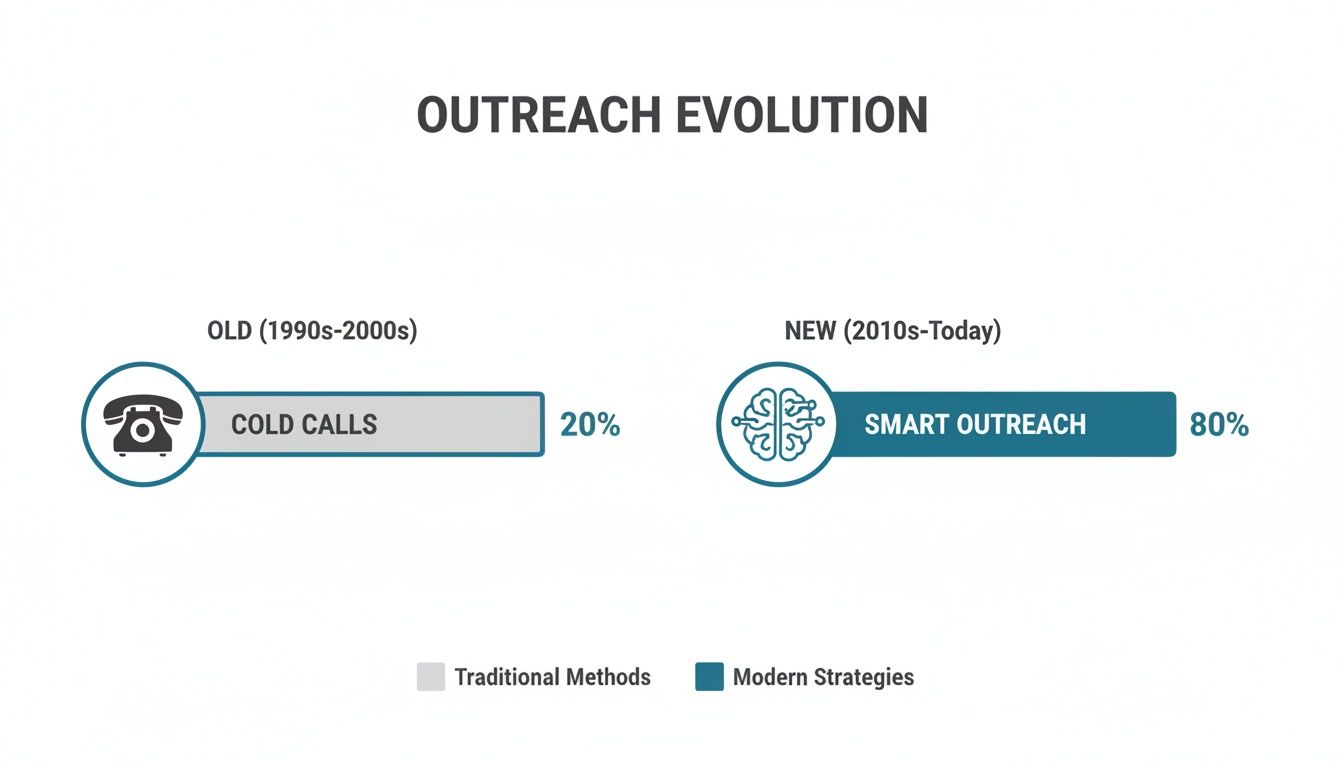
This shift from brute force to intelligent outreach has created a huge gap between old-school telemarketing and modern appointment setting services.
Let's look at a side-by-side comparison of the performance you can expect. The difference is night and day.
Traditional vs Modern Appointment Setting Performance
| Metric | Traditional Telemarketing | Modern Appointment Setting |
|---|---|---|
| Daily Dials per Rep | 80 – 120 | 200 – 300+ |
| Connect Rate | 5% – 8% | 12% – 18% |
| Connect-to-Meeting Rate | 2% – 5% | 15% – 20% |
| Qualified Meetings/Month | 8 – 12 | 30 – 50 |
The numbers don't lie. With better tech and smarter processes, modern teams don't just work harder—they work smarter, connecting with more of the right people and converting them at a much higher rate.
These aren't just vanity metrics; they represent a fundamental change in efficiency and effectiveness. It's the difference between hoping for a few decent meetings a month and building a predictable pipeline engine. You can dive deeper into these performance standards and what’s driving them over at OutboundSalesPro.com.
Let's Talk Money: Pricing Models and Contract Gotchas
Picking a B2B appointment setting service is a bit like choosing a personal trainer. Do you pay per session, or do you put them on a monthly retainer? The answer depends entirely on your budget, how fast you want to see results, and what kind of relationship you're looking for.
There’s no single "best" way to pay. Each model creates a completely different dynamic and set of incentives. Getting this right is the first major step toward a partnership that actually makes you money instead of just costing you.
Pay-Per-Appointment: The "Pay for a Pulse" Model
This is the simplest model to understand. You only open your wallet when the provider delivers what they promised: a meeting on the calendar with someone who fits your ideal customer profile.
It's essentially a pure commission deal. This approach is super attractive if you're new to this whole outsourcing thing or if your budget is tight. Zero risk, right? If they don't book meetings, you don't pay. The catch? The cost per meeting is almost always higher because the agency is taking on all the financial risk.
The Monthly Retainer: The "Outsourced SDR Team" Model
Signing a monthly retainer is like hiring a dedicated sales development team without the headaches of payroll, training, and management. You pay a flat fee every month, and in return, you get a team of people (or a set amount of their time) focused exclusively on your campaign.
This model is for companies ready to play the long game. It gives the agency breathing room to really dig in, learn your market, test messaging, and build a predictable pipeline. It’s more of an upfront commitment, for sure, but retainers almost always lead to a lower cost-per-appointment over time and a much deeper, more strategic partnership.
The Bottom Line: Pay-per-appointment is a transaction. A monthly retainer is an investment in building a revenue engine.
What to Expect and What to Watch Out For
The price tag can swing wildly depending on the model and, more importantly, who you're trying to meet. Getting a mid-level manager on a call is one thing; getting 30 minutes with a C-suite executive is a whole different ballgame.
Generally, you'll see pay-per-appointment deals ranging from $50 to $300. A dedicated team on retainer might run you $4,000 to $8,000 a month. And those premium, C-level meetings? Those can easily command $800 to $1,000 a pop.
That might sound steep, but let's do the math. As some recent analysis shows, if you pay $500 per meeting and your team closes 25% of them on a $20,000 deal, you only need one sale to pay for ten meetings. That’s how companies see a 3-5x ROI in just 90 days. You can dig deeper into the numbers and see more examples of appointment setting costs on HitRateSolutions.com.
Before you sign anything, you have to get clarity on these contract terms:
- Setup Fees: This is a one-time charge for all the upfront work—strategy, list building, tech setup. Make sure you know what it covers.
- Minimum Commitment: Nobody gets results overnight. Expect a minimum contract of three to six months to give the campaign time to ramp up.
- Performance Guarantees: Some agencies will guarantee a certain number of meetings per month. Great. But what happens if they miss the mark? Get that in writing.
- Definition of "Qualified": This is the big one. If you don't agree on exactly what makes an appointment "qualified," you're setting yourself up for a world of pain. Spell it out (e.g., using the BANT framework) so there are no arguments later.
How to Choose the Right Appointment Setting Partner
Picking a partner for **B2B appointment setting services** is the single most important decision you’ll make here. Get it right, and you’ve got an extension of your sales team, feeding qualified meetings into your pipeline like clockwork.
Get it wrong? You'll burn cash, tarnish your brand's reputation, and end up with a calendar full of no-shows and tire-kickers.
Think of it like hiring a pilot. You wouldn’t just ask, "Can you fly a plane?" You'd want to see their flight hours, know what specific aircraft they've flown, and check their safety record. Vetting an appointment setting partner requires that same level of scrutiny. You have to look past the slick pitch deck and get under the hood.
Look for Deep Industry Expertise
Generic outreach is dead. Your first filter should always be industry experience. A partner who already knows your world—whether it's SaaS, manufacturing, or financial services—is starting on third base. They already speak the language, understand the pain points, and know the buyer personas.
They won't waste your time (and money) learning the basic acronyms or trying to figure out your ideal customer profile (ICP). That existing knowledge means they can craft messaging that actually hits home from day one and have conversations that sound credible.
Don't be shy. Ask them directly:
- "Show me some case studies from companies just like mine."
- "How do you change your approach for the different buyers we target?"
- "What kind of results have you gotten for clients with a sales cycle similar to ours?"
Their answers will tell you everything you need to know. You'll quickly see if they're true specialists or just generalists hoping to land another account. This is a critical step for any outsourced lead generation partner because their expertise is what ultimately drives meeting quality.
Scrutinize Their Methodology and Tech Stack
How a partner gets you meetings is just as important as the meetings themselves. You need to pull back the curtain and see exactly what they're doing. A modern, high-performing service won’t just be hammering the phones all day.
Look for a smart, multi-channel strategy that blends email, phone calls, and social platforms like LinkedIn. Then, dig into their tech stack. Are they using modern sales engagement platforms and data enrichment tools to make sure their targeting is laser-focused? A team still relying on stale lists and manual dialing is playing a different game—and it’s not one you want to be a part of.
A great partner won't just tell you what they do; they'll show you. Ask for a demo of their systems. Get a walkthrough of their reporting dashboard. See real examples of their outreach sequences. Transparency is the ultimate sign of a confident and competent provider.
Prioritize Seamless Integration and Reporting
An appointment setter that operates in its own little world is a recipe for disaster. The handoff from their team to your sales reps has to be completely seamless.
This starts with solid CRM integration. They need to be able to sync data, log activities, and book meetings directly into your existing system, whether it’s Salesforce, HubSpot, or something else. No excuses.
Just as crucial is their commitment to reporting. Vague, fluffy updates are a massive red flag. A top-tier partner gives you a clear dashboard with real-time access to the metrics that matter: appointment set rate, show rate, and qualification rate. They should be meeting with you regularly to review performance, figure out what’s working, and tweak the strategy.
This constant feedback loop is what ensures the campaign keeps improving and stays aligned with your actual revenue goals. A partner who can plug right into your sales tech from day one saves you weeks of headaches and ensures you're making data-driven decisions from the jump.
Creating a Seamless Handoff from Setter to Closer

Getting a perfectly qualified appointment on the calendar is a huge win. But it's only half the battle.
If the handoff from the appointment setter to your sales closer is clunky, that warm lead will go cold before your rep even says "hello." This isn't just an admin step; it’s the moment of truth that can make or break the entire deal.
Think of it like a relay race. Your setter is a world-class sprinter, but if they drop the baton, the race is over. A smooth handoff ensures your closer grabs that opportunity and keeps running at full speed, turning a simple meeting into a pipeline-generating conversation.
The whole process hinges on a rock-solid Service Level Agreement (SLA). This isn't just boilerplate. It's the shared rulebook that gets everyone on the same page, defining exactly what a "qualified meeting" looks like with zero ambiguity.
Nailing the Handoff with Tech and Process
For this to work with any b2b appointment setting services, deep CRM integration is non-negotiable. All the rich data—conversation notes, prospect details, uncovered pain points—has to flow straight into your CRM. Instantly.
Forget manual data entry. That’s a surefire way to lose critical details and leave your sales reps flying blind.
Once the data is locked in, it's time to arm your closer. Every calendar invite should come with a comprehensive pre-meeting brief. Think of this as your closer's pre-game playbook, giving them everything they need to walk in and own the conversation.
A killer brief must include:
- Prospect Intel: The basics—name, title, company—plus a link to their LinkedIn profile.
- Key Pain Points: The specific challenges the setter dug up. What’s keeping them up at night?
- Conversation Highlights: Juicy quotes or critical context that reveals the prospect's real mindset.
- Next Steps: A clear summary of what the prospect was told to expect from the call.
This intel lets your closer skip the small talk and dive right into what actually matters to the prospect, referencing the previous conversation like they were there themselves.
The quality of the handoff says everything about the partnership. When a setter delivers a detailed, automated brief, it shows they’re invested in the real goal: closing deals, not just booking meetings.
Closing the Loop to Get Better and Better
The work isn't done when the sales rep takes over. The secret sauce for long-term success is a tight feedback loop. After every single meeting, your sales team needs to give structured feedback to the appointment setters.
This isn't just a "thumbs up" or "thumbs down." It's real, actionable intel.
The feedback needs to answer a few key questions:
- Was the prospect really a fit for our Ideal Customer Profile?
- Were the pain points they mentioned actually urgent and accurate?
- Did they know exactly why they were taking this meeting?
- Did the call lead to a clear next step in our sales process?
This constant flow of information is gold. It helps the setting team sharpen their targeting, tweak their messaging, and refine how they qualify leads. Over time, this feedback loop guarantees the appointments get better and better, making your entire sales engine hum. It’s a foundational part of building out effective sales cadence best practices where every touchpoint drives real results.
Common Questions We Always Get Asked
Even when the game plan seems solid, there are always a few practical questions that pop up before pulling the trigger on a B2B appointment setting service. Let's tackle the big ones head-on. No fluff, just straight answers to set the right expectations from day one.
How Fast Can We Actually Get Qualified Appointments?
Everyone wants to know this. While no two campaigns are the same, a good service will typically start landing the first qualified meetings on your calendar within 3 to 4 weeks.
That first month isn't just radio silence, though. It’s the critical ramp-up phase where the real work happens: dialing in the strategy, building a rock-solid list of prospects, and crafting outreach that doesn't sound like a robot wrote it.
Once that foundation is built and the engine is humming, you should see a predictable, steady flow of meetings. The whole thing snowballs as the team learns from real-time feedback and keeps tweaking their approach.
What’s the Real Difference Between “Lead Gen” and “Appointment Setting”?
This one trips a lot of people up, but the distinction is crucial. Lead generation is about casting a wide net to capture interest. Think of someone downloading a whitepaper or filling out a "contact us" form. It’s about getting hands in the air and filling the very top of your funnel with people who've shown some passive curiosity.
B2B appointment setting, on the other hand, is a proactive, focused hunt. It takes those leads (or finds new, colder ones) and actively engages them with one very specific goal: to book a qualified sales meeting. It’s about turning a vague "I'm interested" into a confirmed "Yes, let's talk Tuesday at 10 a.m." on your sales team's calendar.
Think of it this way: Lead gen gives you a list of people who raised their hand in a crowd. Appointment setting walks over to those people, makes sure they're the right fit, and schedules a real one-on-one conversation.
Will This Actually Work for Our Niche or Super-Complex Product?
Yes, and honestly, this is where a great service really earns its stripes. The best B2B appointment setting services do their best work with complex products because they have to. They start by doing a deep dive to genuinely understand what you do, who you do it for, and why anyone should care.
For a niche product, their hyper-targeted outreach is way more effective than any broad-stroke marketing campaign. It cuts through the noise and gets your message directly to the handful of decision-makers who actually need to hear it, turning what you thought was a complex sale into a clear advantage.
Ready to stop chasing leads and start taking qualified meetings? Growlancer builds predictable B2B sales pipelines by combining expert strategy, authority content, and targeted outreach that puts your leadership team in front of ideal buyers. See how we can fill your calendar at https://growlancer.ai.